Why You Can’t Just Buy Cloves Directly From a Zanzibar Farmer: Inside the ZSTC System
Published 26 September 2026 · Commodities.tz Editorial
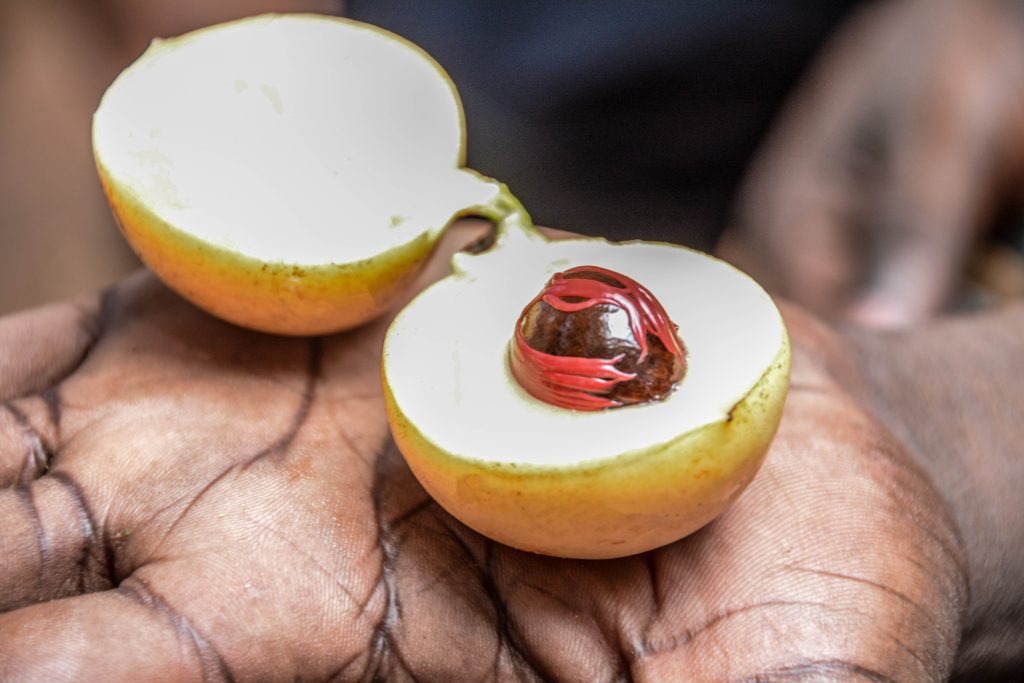
Cinnamon, black pepper, and ginger move through Zanzibar’s economy as ordinary agricultural commodities, bought and sold by whoever a farmer chooses to sell to. Cloves do not. Since 1966, the Zanzibar State Trading Corporation (ZSTC) has held a government-assigned monopoly over clove marketing, established after the Zanzibar Revolution nationalized land and trade; a clove market law passed in 1985 remains in force today and makes ZSTC the sole legal buyer and exporter of cloves grown on the islands. Farmers cannot legally sell cloves to a private trader or an exporter directly, and this single structural fact shapes almost everything else about how the crop is priced, dried, graded, and — in a documented volume — smuggled.
The legal and processing framework
ZSTC’s modern mandate runs through the Zanzibar State Trading Corporation Act No. 11 of 2011 and the Clove Development Act No. 2 of 2014, with detailed processing rules set out in the 2014 Zanzibar Clove Development Regulations. Those regulations specify how cloves must be dried — using mats or other ZSTC-approved materials — and explicitly prohibit drying methods long used informally, such as spreading cloves on road surfaces or house verandas, treating violations as regulatory offenses. Separately, the Agricultural Produce Export (Clove Grading and Export) Rules, under Cap. 111 of Zanzibar’s laws, set the grade specifications that determine export eligibility: cleaner, more uniform cloves qualify for first grade and earn farmers a higher price, giving the grading system real financial teeth rather than functioning as a paperwork formality.
Where the monopoly creates friction
Because ZSTC is legally the only buyer, its producer price effectively sets farm-gate income regardless of where world clove prices sit. Producer prices have been raised over time — from roughly TZS 3,500 to TZS 14,000 per kilogram at various points — but the price ZSTC pays still tracks the world market downward when global prices fall, even as the corporation has at times pledged otherwise. That gap between the ZSTC price and what a cross-border buyer will pay has produced a documented informal trade: farmers smuggling cloves into Kenya, where buyers reportedly pay close to double the ZSTC rate, a pattern researchers studying the sector describe as a direct consequence of monopsony pricing rather than simple opportunism.
Where the crop actually comes from
A 2020 field study of Wete District on Pemba — the island that produces the large majority of Zanzibar’s cloves — found South Pemba alone accounted for 4,276 tonnes, or 68 percent, of national output in the year studied, against a national production trajectory that had fallen roughly 65 percent over the prior decade from a 1970s peak of around 16,000 tonnes. The same study pointed to weak extension services, land constraints, and a farmer base skewing older and predominantly male (90 percent of surveyed farms were male-operated) as compounding the pricing-driven disincentives to reinvest in the crop.
What this means for sourcing
Any Zanzibar clove offer that claims to be “direct from farmer,” bypassing an export channel, cannot legally be true under current law — the crop must pass through ZSTC to be exported at all. Buyers doing due diligence on a Zanzibar clove shipment should ask specifically for ZSTC export documentation and grade certification rather than farm-level provenance claims, since the latter has no legal export pathway independent of the former.
- Chami, Avit Alex, "Contemporary Dynamics in Zanzibar's Clove Industry: Prospects and Challenges Facing Smallholder Farmers in Wete District, Pemba, Zanzibar," Modern Concepts & Developments in Agronomy (2020) — https://crimsonpublishers.com/mcda/fulltext/MCDA.000627.php — 2026-09-26
- Zanzibar State Trading Corporation, "Zanzibar Cloves" — https://zstcznz.org/zanzibar-cloves/ — 2026-09-26
- Zanzibar State Trading Corporation, "Who We Are" — https://zstcznz.org/who-we-are/ — 2026-09-26
- UNEP Law and Environment Assistance Platform, "Agricultural Produce Export (Clove Grading and Export) Rules (Cap. 111)" — https://leap.unep.org/countries/tz/national-legislation/agricultural-produce-export-clove-grading-and-export-rules-cap — 2026-09-26
- WIDER Working Paper 2022/54, "Determinants of clove exports in Zanzibar: implications for policy," UNU-WIDER — https://www.wider.unu.edu/sites/default/files/Publications/Working-paper/PDF/wp2022-54-determinants-clove-exports-Zanzibar-implications-policy.pdf — 2026-09-26