Tanzania & Zanzibar Cloves: Market, Origins & Sourcing Guide
Overview & History
Clove trees are not native to Zanzibar. They were brought from the Mascarene Islands in the early 19th century, with introduction popularly credited to a Zanzibari planter around 1812. Expansion accelerated after Sultan Said bin Sultan of Muscat and Oman relocated his capital to Zanzibar in the 1830s and actively promoted clove cultivation. Large plantations, worked initially under slave labour, made Zanzibar the world’s dominant clove origin by the late 19th century — the islands, and Pemba in particular, are described as supplying up to around 90% of world output at that era’s peak.
Pemba, the northern and more fertile island, became known as the “clove island.” The 1964 Zanzibar Revolution nationalized the large Arab-owned estates and redistributed clove land to smallholders under a “three-acre” policy — a structural shift researchers cite as a driver of Zanzibar’s long-run production decline. By 2016, academic estimates put Zanzibar’s share of global clove supply at well under 1%, as Indonesia and Madagascar came to dominate. The historical prestige of the origin still commands buyer interest disproportionate to its present volume.
Production: Pemba vs. Unguja
Pemba remains overwhelmingly the larger producer. Official 2021 purchase records show Kusini Pemba supplying 74.8% of that season’s recorded tonnage and Kaskazini Pemba a further 23.7% — together over 98% — with Unguja’s three regions contributing only around 1.5% combined. Other sources describe a somewhat less extreme but still lopsided split, commonly cited as roughly 70–80% Pemba versus 20–30% Unguja.
National purchase volumes have been highly volatile: 3,322 tonnes in 2015, rising to 8,277 tonnes in 2017, collapsing to 675 tonnes in 2018, recovering to 7,841 tonnes in 2021, then falling to roughly 4,734 tonnes in 2022. Bank of Tanzania trade data show a further swing: export volume rose from roughly 700 to about 7,000 tonnes year-on-year (year ending June 2026). This volatility — driven by biennial bearing, weather, tree age/disease, and price incentives — is a defining feature buyers should plan around.
Harvesting is by hand: pickers climb trees to pick unopened flower buds once they turn pink. Official monthly data confirm the marketing season runs roughly July through December, with heaviest volumes in August–October. ZSTC has also been expanding sourcing beyond the islands, targeting roughly 500 tonnes from mainland Tanga and Morogoro for the 2024/2025 season.
Marketing Structure: The ZSTC Monopsony
Clove marketing in Zanzibar is not an open, competitive trade. The Zanzibar State Trading Corporation (ZSTC), a state-owned entity dating to 1966, holds the sole legal right to buy cloves from farmers and export them — a monopsony on purchasing and a monopoly on export. Farmers may only sell through official buying centres. Researchers describe recurring tension over producer prices: ZSTC sets fixed, graded prices that reportedly sit below the effective export price, driving persistent informal cross-border trade into Kenya where farmers can earn more. For buyers, legitimate export volume from Zanzibar is gated entirely by ZSTC’s purchasing and export decisions — there is no private-sector export channel from the islands.
Grading and Quality
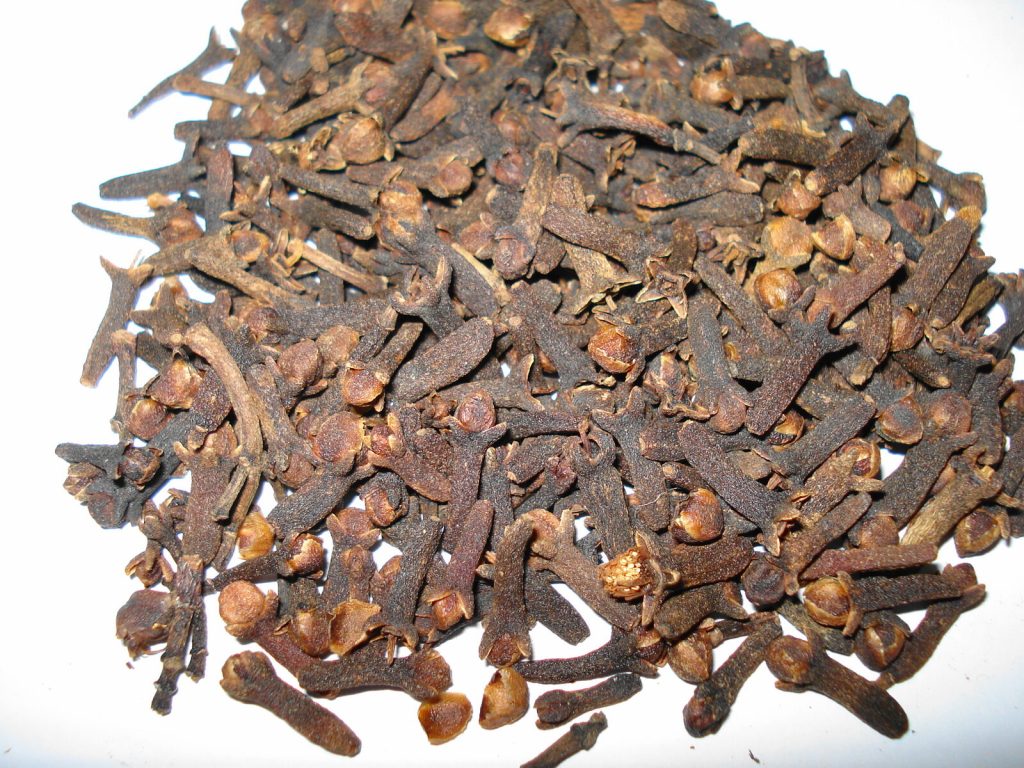
ZSTC grades purchased cloves into tiers determining farmer payment — 2023 season reporting cites Grade 1, 2 and 3 cloves priced roughly TZS 15,000, 13,500 and 12,500/kg respectively, plus a lower tier around TZS 7,000/kg. A detailed public specification of what separates these grades could not be found; buyers should request grading specifications directly from ZSTC. Internationally, whole cloves are commonly classified against the ISO 2254:2004 standard. Zanzibar cloves are widely described as hand-picked and sun-dried, with a reputation for high essential-oil (eugenol) content.
Trade and Export Context
Tanzania is a minor player by volume next to Indonesia and Madagascar. Recent bilateral exports are small in absolute terms — roughly $902,500 to Indonesia and around $93,500 to Italy in 2023 — though aggregate figures run far higher. Bank of Tanzania figures show a strong 2025–2026 rebound: clove export value rising from roughly $4.8 million (year ending Feb 2025) to $33.9 million (year ending Feb 2026), with cloves contributing an estimated $44.6 million — around 63% of total Zanzibar goods exports — at a unit price of roughly $6,336/tonne, up about 34% year-on-year. Analysts caution this heavy dependence on a single, volatile commodity leaves Zanzibar’s export economy structurally exposed.
Current Market
| Market | Type | Grade | Price | Observed | Source |
|---|---|---|---|---|---|
| Zanzibar | Export | — | USD 6.03/kg | 1 Jan 2024 | UN Comtrade unit value (via Selina Wamucii) |
| ZSTC government buying price | Farm gate | Grade One | TZS 15,000.00/kg | 1 Aug 2023 | Revolutionary Government of Zanzibar / ZSTC (via The Citizen) |
| ZSTC government buying price | Farm gate | Grade Two | TZS 13,500.00/kg | 1 Aug 2023 | Revolutionary Government of Zanzibar / ZSTC (via The Citizen) |
| ZSTC government buying price | Farm gate | Grade Three | TZS 12,500.00/kg | 1 Aug 2023 | Revolutionary Government of Zanzibar / ZSTC (via The Citizen) |
| ZSTC government buying price | Farm gate | Lowest grade | TZS 7,000.00/kg | 1 Aug 2023 | Revolutionary Government of Zanzibar / ZSTC (via The Citizen) |
- Kabote, S. J. & Tunguhole, J. — Determinants of Clove Exports in Zanzibar: Implications for Policy — https://dergipark.org.tr/en/download/article-file/2671692 — 2026-09-24
- Office of the Chief Government Statistician, Zanzibar — Zanzibar Statistical Abstract 2021 — http://www.ocgs.go.tz/storage/reports/quick-link/fQ2ytlKXKsGLNCs0SIgmMlGPNg3zrbtA6K3tgdtM.pdf — 2026-09-24
- Daily News — ZSTC targets 500 tonnes of cloves from Tanga, Morogoro for 2024/2025 season — https://dailynews.co.tz/zstc-targets-500-tonnes-of-cloves-from-tanga-morogoro-for-2024-2025-season/ — 2026-09-24
- Daily News — Zanzibar export boom masks clove concentration — https://dailynews.co.tz/zanzibar-export-boom-masks-clove-concentration/ — 2026-09-24
- The Citizen — Smiles as cloves prices increase despite drop in production — https://www.thecitizen.co.tz/tanzania/zanzibar/smiles-as-cloves-prices-increase-despite-drop-in-production-4324978 — 2026-09-24
- Observatory of Economic Complexity — Cloves in Tanzania Trade — https://oec.world/en/profile/bilateral-product/cloves/reporter/tza — 2026-09-24
- Global Food Networks — Understanding Clove Grades, Quality Standards & Bulk Export Requirements — https://globalfoodnetworks.com/2026/02/04/understanding-clove-grades-quality-standards-bulk-export-requirements/ — 2026-09-24